

Milad Cheragh Zade
PhD
Robust Predictive Maintenance Planning under Imperfect Deterioration Models
Host organisation
Technical University of Munich (TUM)
Project Description
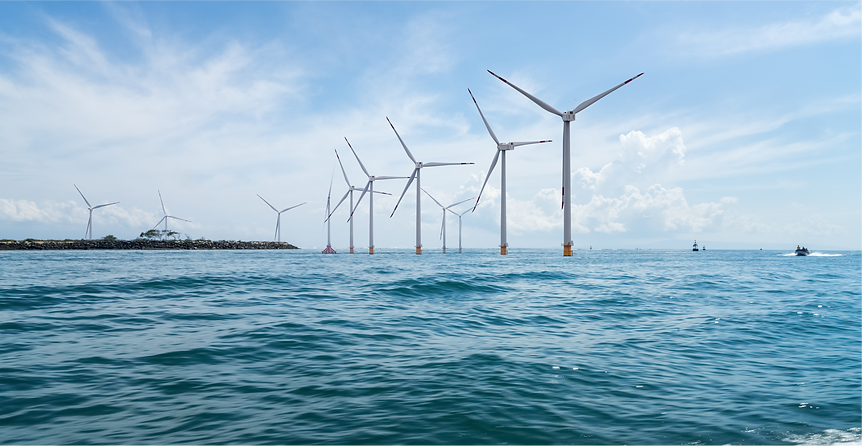
This project focuses on developing robust predictive maintenance strategies for wind turbines operating under uncertainty and imperfect deterioration models. The goal is to enhance reliability and resilience in autonomous wind power plant operations by integrating data-driven diagnostics with model-based decision-making. Using probabilistic modeling, Bayesian updating, and AI-enhanced optimization techniques, the research aims to create a decision-making pipeline that accounts for uncertainty and adapts to evolving system conditions. The outcomes will support cost-effective, trustworthy maintenance planning and contribute to the broader goal of intelligent system integration in renewable energy infrastructure.
Supervisors
Prof. Daniel Straub
Background
Milad is an Iranian researcher with a BSc in Civil Engineering and an MSc in Earthquake Engineering from the International Institute of Earthquake Engineering and Seismology (IIEES). He has a strong foundation in mathematics and scientific computing, with focus on coding, uncertainty modeling, data inference, and machine learning—particularly Bayesian inference and statistics. His MSc thesis involved developing software to monitor post-tensioned tendons in bridges. He later worked as a Research Assistant at the University of Nebraska–Lincoln, focusing on the interface between seismic risk and structural monitoring. He is currently pursuing an MPhil at The Hong Kong University of Science and Technology, researching AI-based decision support systems for infrastructures. Milad enjoys exploring physical phenomena and staying active through sports.
Motivation
My research motivation lies in addressing scientific computing problems where mathematics enables better modeling, deeper understanding, and improved decision-making under uncertainty. Complex engineering systems operate in uncertain environments, and mathematical tools such as probabilistic modeling and inference can reduce ambiguity and enhance predictive capability. I am particularly interested in applying these methods to risk monitoring and resilience assessment of infrastructure. This includes developing decision support tools that integrate machine learning with physical modeling to inform actions under uncertainty. A key focus is on combining theory with data inference from real-world observations to refine models and improve reliability. This interdisciplinary approach supports the development of intelligent systems for monitoring, assessment, and decision-making across critical infrastructure domains.
