

Gatien Chopard
PhD
Decision support systems for automatic anomaly interpretation and ranking
Host organisation
Department of Wind and Energy systems, Technical University of Denmark.
Industry partner
ENGIE digital
Project Description
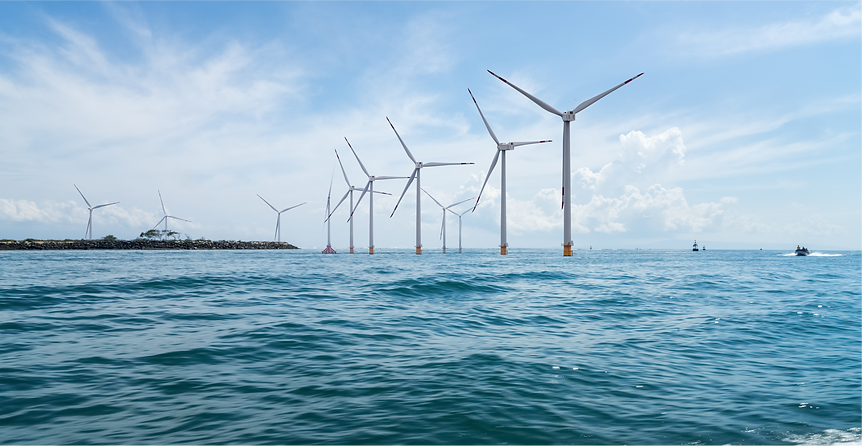
My project consists in developing a decision support tool that enables informed and efficient wind turbine operations and maintenance actions. It is made concrete through several key steps. First, build a combination of anomaly detection and alarm prediction models, aiming at predicting turbine downtime events and estimate their severity. Another objective is to provide a likelihoodbased assignment of probable causes of a turbine stop, providing valuable information for decision making. The developed approaches are finally combined into a risk ranking system considering the likelihood of triggering downtime or corrective actions. That way, actions can be prioritized, and major repairs anticipated, resulting in a lower cost of wind turbine maintenance.
Supervisors
Host Organization main supervisor: Nikolay Dimitrov
Host organization co-supervisor: Athanasios Kolios
Industrial partner supervisor: Nicolas Girard
Academic co-supervision co-supervisor: Estefania Artigao
Background
I come from Cholet, a city in the West of France known for its red handkerchief and its basketball club. I studied at the Ecole Centrale de Nantes, where I got two master specializations. One is urban engineering, that lead to an internship at Politecnico Di Milano on micro climate simulations. The other one is applied mathematics, statistics and machine learning. For my master thesis, I worked at EDF R&D on surrogate modeling and uncertainty quantification. After that, I was a research engineer at Laboratory of Climate science and Environment (LSCE), located on Plateau de Saclay, and worked on forest monitoring. Outside of my PhD, I am quite passionate about the game of go, and enjoy running and tennis.
Motivation
My goal is to make a difference on a topic closely related to climate change, through the angles of climate, energy or environmental science. This is why I was drawn to wind energy. I choose to pursue that goal through a PhD, as it enables to develop ideas in depth, and also because I’m interested in the dissemination of research as well as teaching. On the other hand, collaborating with an industrial partner is another source of motivation, as it gives an applied dimension to my research.
