

Alessandro Bassalti
PhD
Advanced measurement and data-driven techniques for automated structural assessment
Host organization
University of Porto (FEUP)
Project Description
This project aims to exploit advanced measurement techniques and implement powerful machine learning approaches for the automated identification of deviations from a structure’s healthy state. It focuses on the development and synchronization of multiple optical measurement systems—including camera-based methods, optical fibres, and optical accelerometers—combined with conventional sensing technologies. The goal is to create an integrated monitoring setup capable of delivering high-fidelity data for data-driven system identification and automated damage detection. This work contributes to the development of intelligent, automated structural assessment systems for enhanced reliability and early anomaly detection.
Supervisors
Prof. Filipe Magalhães
Silvia Vettori
Emilio Di Lorenzo
Background
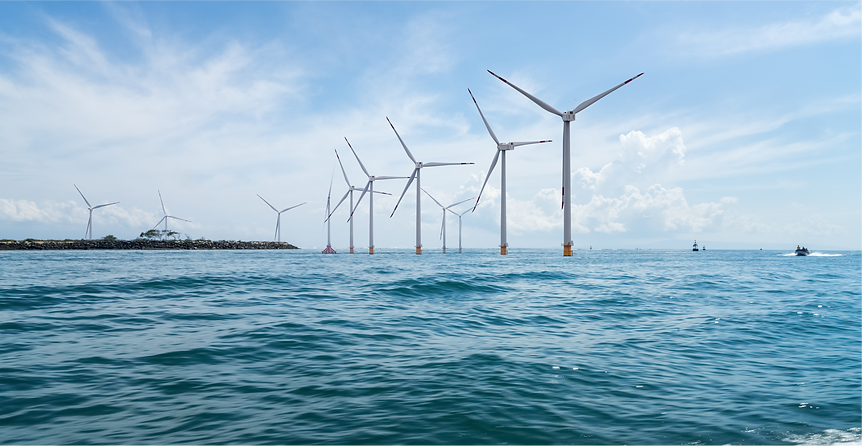
I obtained both my Bachelor's degree in Aerospace Engineering and my Master's degree in Energy Engineering from Politecnico di Milano, which provided me with a strong foundation in structural dynamics and renewable energy systems. I conducted my Master's thesis at the Department of Mechanical Engineering, where I worked on the autonomous control of wind farms using machine learning techniques. This experience sparked my interest in the intersection of artificial intelligence and wind energy and led me to further explore structural monitoring and data-driven methodologies as a natural progression of my academic and professional journey.
Motivation
I hold a Bachelor's degree in Aerospace Engineering and a Master's degree in Energy Engineering, which provided me with a strong foundation in structural dynamics and renewable energy systems. I conducted my Master's thesis at the Department of Mechanical Engineering at Politecnico di Milano, where I worked on the autonomous control of wind farms using machine learning techniques. This experience sparked my interest in the intersection of artificial intelligence and wind energy, and led me to further explore structural monitoring and data-driven methodologies as a natural progression of my academic and professional journey.
